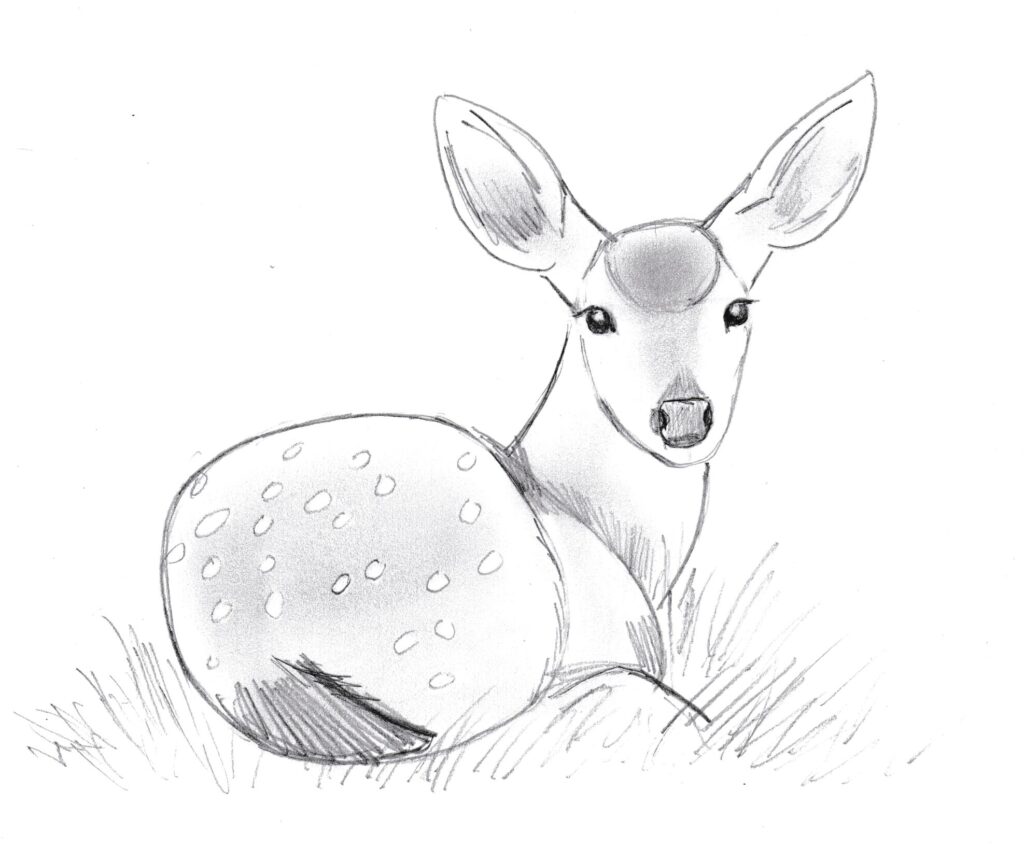
If you or your child wants to learn how to draw in pencil, you’ve come to the right place! Pencil drawing is one of the most accessible and versatile art forms. With just a few basic materials, you can begin creating sketches and even detailed drawings that capture light, shadow, and texture.
Understanding Your Pencil
Although we often call the tip of a pencil the “lead,” it’s actually made of graphite. Graphite is a soft mineral that allows for smooth, erasable marks, which is why drawing with pencils is also called graphite drawing.
Different pencils have different levels of hardness. The graphite may be very soft for dark, smudgy marks to very hard for light, precise marks. Experimenting with different types of pencils will help you achieve a variety of effects in your art.
The Right Supplies Matter
As with any craft, the quality of the supplies you use can affect your results. You can certainly use a regular school #2 pencil and printer paper – sometimes I do that when I’m just doodling or testing out ideas. However, higher-quality materials will give you more control, smoother lines, and richer shading. Think of it like cooking: you can make macaroni and cheese with from a box of noodles and the powdered cheese, or you can make your own pasta and use real cheddar. (To be honest, I’ve never made my own pasta, but I’ve eaten homemade noodles. They’re amazing!) The right tools and ingredients help you create something truly special.
Supplies You Need:
You don’t need a long list of fancy materials to get started. All you really need is a piece of paper, a pencil, and an eraser. With just these three items, you can begin practicing lines, shapes, and shading right away.
Once you’re ready to expand your toolkit, here’s a list of extra supplies that can make drawing easier or more fun. You can find them at your local arts and crafts store, an online store, or Amazon:
-
Drawing Pencils: A range from hard (H, 2H) to soft (B, 2B, 4B) pencils allows you to experiment with light lines, dark shading, and everything in between.
-
Erasers: A kneaded eraser or a soft rubber eraser gives you more control for corrections and highlights.
-
Paper: Higher-quality paper with a bit of texture can help your graphite grip the surface for smoother, richer results.
-
Tortillons or Blending Stumps (Optional): These help create smooth shading and gradients, though tissue, cotton swabs, or fingers can also work.
Tips for Beginners
-
Practice regularly. Like any skill, drawing improves with consistent practice. Even short daily sessions help build hand-eye coordination and confidence.
-
Start simple. Begin with basic shapes and objects before tackling complex subjects. Circles, cubes, and simple fruits are perfect practice material.
-
Experiment. Try different pencils, papers, and techniques. Smudging, cross-hatching, and stippling are fun ways to add texture to your drawings.
-
Have fun! Pencil drawing is as much about enjoying the process as it is about creating a finished piece. Don’t worry about perfection—focus on learning and exploring.
Now that you have your supplies and a few tips, it’s time to start drawing! Remember: practice and patience are key. Pick up your pencil, make your first marks, and watch your skills grow.